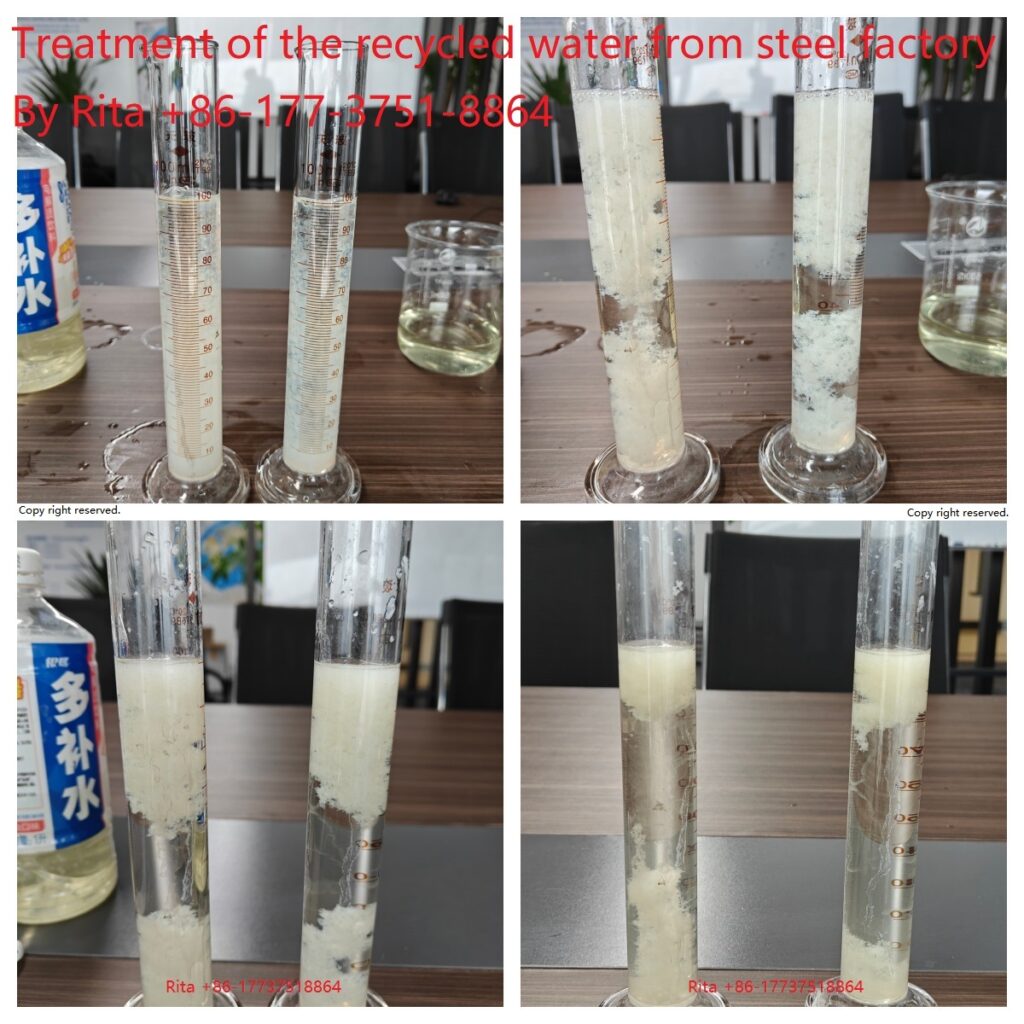
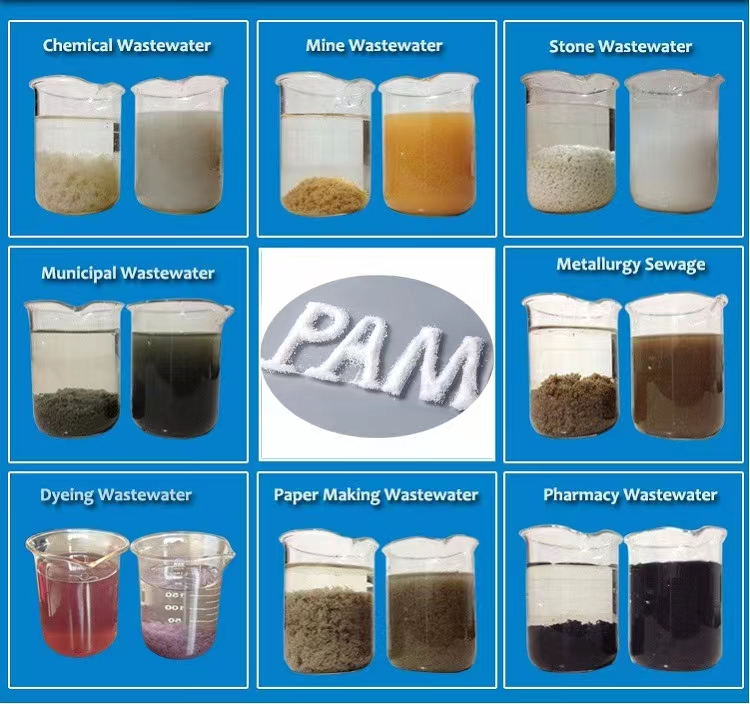
This week, our team achieved remarkable results for a client in the steel industry. Faced with challenging wastewater streams—including black water and light white water—we applied a minimal amount of our advanced polyacrylamide chemicals. To everyone’s amazement, just a few drops were enough to clarify the water, restoring it to crystal-clear quality with unmatched efficiency.
Why settle for traditional methods when our polyacrylamide solutions offer: ✅ Rapid clarification – Minimal dosage, maximum impact. ✅ Industry-proven performance – Trusted by steel and heavy industrial sectors. ✅ Cost-effective sustainability – Reduce chemical usage and operational costs.
Whether you’re dealing with complex industrial waste or seeking a smarter treatment approach, our polyacrylamide technology delivers reliable results.
Ready to transform your wastewater process? Contact Rita today for tailored solutions and expert guidance. Let’s make clarity happen—one drop at a time!
Last time, I shared our loading PAM on pallet by man force. This time, let’s see how automatic loading machine works. For more info of polyacrylamide, hope you can try me: wa.me/8617737518864
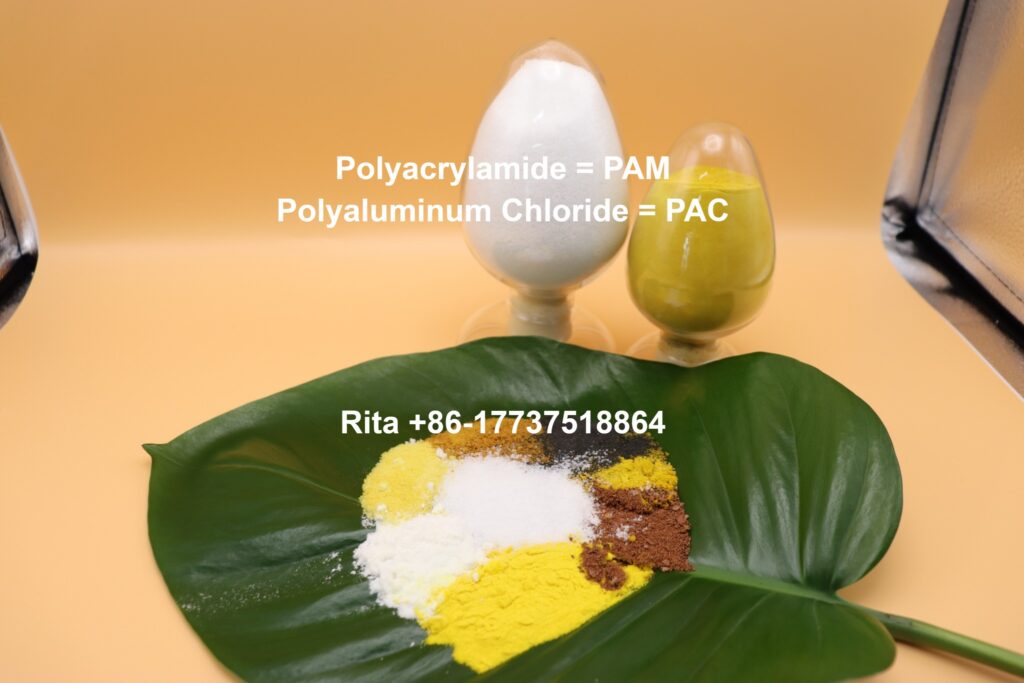
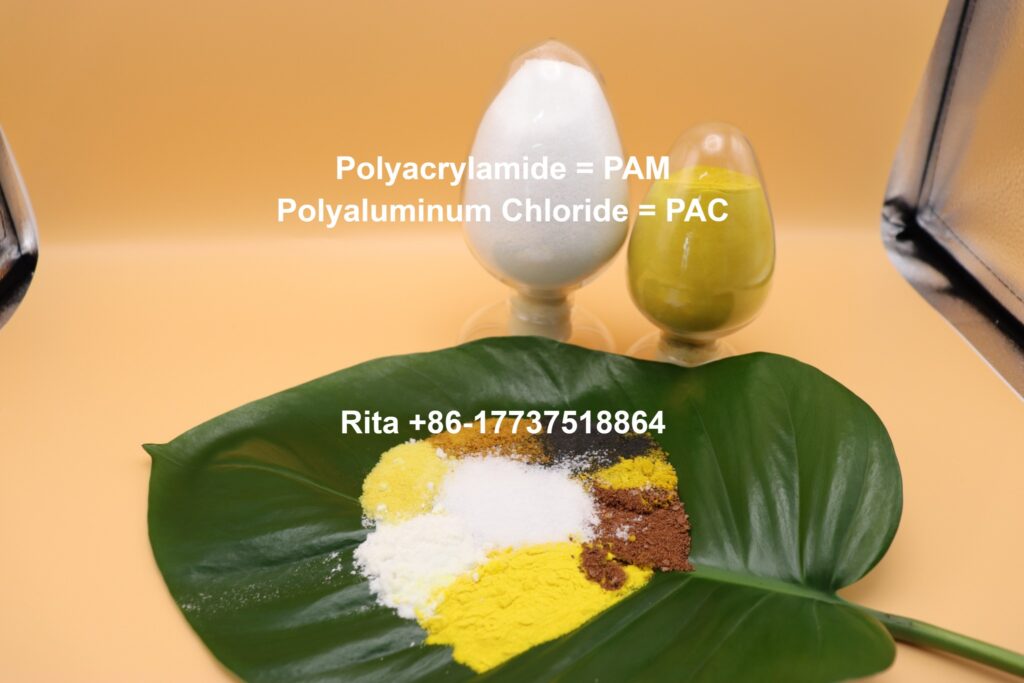
You may have already felt the increasing price of PAC(polyaluminum chloride) products. While the PAM (polyacrylamide) price is likely to increase as well… Cold winter is coming~
Our price is still steady, hoping to get more clients. Please kindly contact Rita for price details. Whatsapp: https://wa.me/+8617737518864
Since the third quarter of 2025, the water treatment chemical industry has been experiencing unprecedented price volatility. Polyaluminium chloride (PAC), a core product, led the price surge. In September, Gongyi City Water Purification Materials Company raised the unit price to 25 yuan per bag, reaching the industry’s peak for the year.
Following closely, polyacrylamide (PAM) manufacturers announced a 200 yuan per ton price increase in late September, resulting in a combined effect of rising prices for both raw materials.
This price fluctuation has transcended typical seasonal fluctuations. Rising costs for raw materials like bauxite, production capacity reductions due to tightening environmental protection policies, and surging demand for industrial wastewater treatment have combined to create a triple pressure for continued price increases.
More seriously, the price increase is being transmitted down the supply chain, causing operating costs for water treatment companies to rise sharply. Some small manufacturers have suspended production and are waiting to see what happens. The industry as a whole has entered a severe winter period of high costs and high barriers to entry.
The core drivers of this round of water treatment chemical price fluctuations are multifaceted. From the supply side, the persistently high prices of basic raw materials like bauxite directly drive up PAC production costs.
PAM, on the other hand, is subject to fluctuations in international oil prices, further exacerbating cost pressures.
Environmental protection policies have become another key variable. Following the implementation of the newly revised Water Pollution Prevention and Control Law, small and medium-sized enterprises have been forced to invest heavily in technological upgrades to meet emission standards. Some outdated production capacity has been withdrawn from the market, leading to a contraction in overall supply in the industry.
On the demand side, there has been a rigid growth trend. With stricter industrial wastewater discharge standards and expanded municipal wastewater treatment capacity, demand for PAC in the papermaking, printing and dyeing industries has increased by nearly 15% year-on-year. Meanwhile, the use of PAM, a deep treatment agent, in wastewater treatment in chemical parks has surged. This supply-demand disparity has been amplified by rising logistics costs. High fuel prices have increased transportation costs to 12% of total costs, forming the final link in the price transmission chain. Notably, the price increases of related products such as monoammonium phosphate reflect the fact that cost transmission across the entire chemical industry chain has entered a resonant phase.
Sorry we can’t provide specific price range of PAC chemicals, please kindly note that PAC also comes in different grades and product types, and its price also varies depending on the specific product and supplier, but it is generally affected by product grade and usage. (Like the color, valid content, etc)
Factors Affecting Price
Product Type and Grade: Both PAM and PAC are categorized into different types (e.g., anionic/cationic) and grades, which directly impact their prices.
Supplier and Purchase Quantity: Different suppliers may have different pricing strategies. Larger quantities (e.g., greater than 100,000 kg) often offer lower prices. Product Quality and Application: PAM products used in specific applications, such as oil drilling, may also have different pricing.
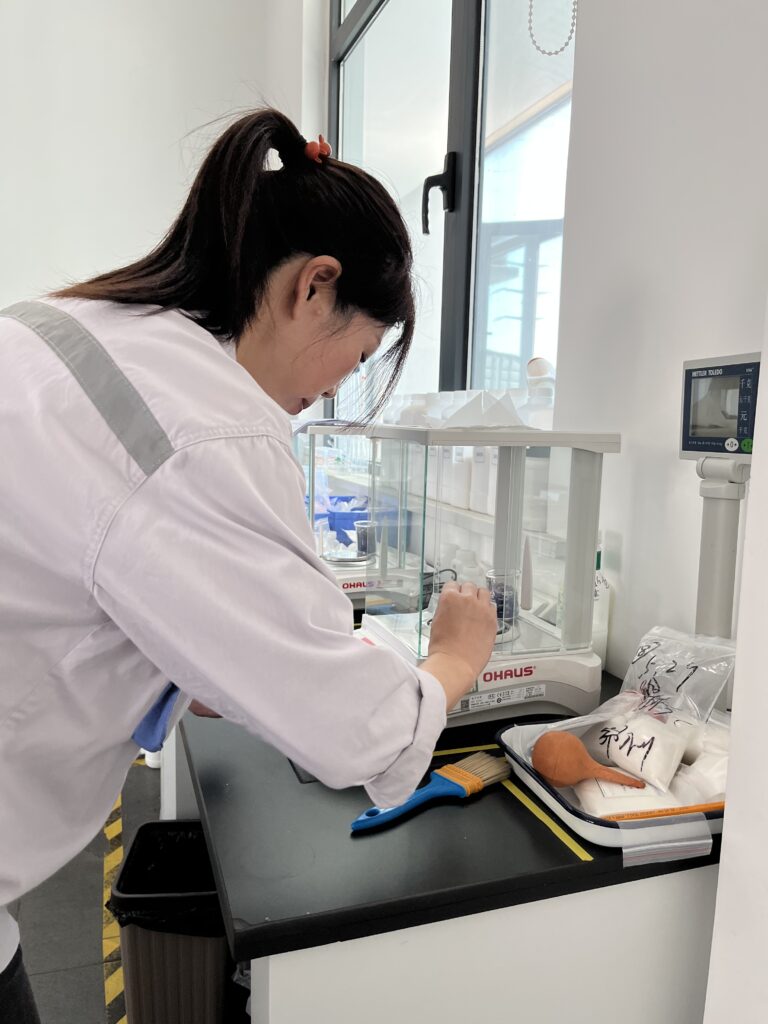
Thanks for our client’s trust, they send their present polyacrylamide sample to us for a comparison test. We would like to provide a clear, technical explanation of the observable differences between the two products, which we believe highlights the superior quality and reliability of our offering.
Key Observations from the Dissolution Test:
1.Viscosity:
•Our Product: Exhibits a characteristically high viscosity. This is a direct indicator of a high effective polymer chain elongation in solution. High molecular weight is crucial for optimal performance in applications such as flocculation, sedimentation, and dewatering, as it creates a stronger network to capture and pull down solids.
•Client’s Sample: Shows significantly lower viscosity. This suggests a lower molecular weight, which can result in reduced efficiency and higher dosage requirements to achieve the same effect, ultimately affecting your operational costs.
2.Solubility & Residue:
•Our Product: Dissolves completely, leaving no visible residue in the beaker. This demonstrates a high purity level and excellent solubility. Complete dissolution ensures that 100% of the product is active and contributing to the process, preventing clogging of filters and injection systems.
•Client’s Sample: Leaves a significant amount of insoluble residue at the bottom of the beaker. This residue typically consists of cross-linked polymer (gel balls), impurities, or filler materials. These inactive components represent wasted product, can cause blockages in equipment, and reduce the overall efficiency of your process.
What This Means for Your Operations:
The differences observed are not minor; they are fundamental to the product’s quality and manufacturing process.
•Our high viscosity and complete solubility are the result of advanced polymerization technology and a strict quality control process that ensures a consistent, high-purity product with a well-defined molecular structure.
•The low viscosity and high residue in the other sample often indicate one or more of the following: the use of lower-grade raw materials, less controlled manufacturing conditions, or the intentional addition of inert fillers (e.g., salts) to increase product weight. This is a common cost-cutting measure that directly compromises performance.
Conclusion:
Our product is engineered for maximum efficiency and reliability, ensuring you get full value from every kilogram purchased. The complete dissolution means no product waste and a lower risk of operational issues, while the high viscosity guarantees effective performance at optimal dosage rates.
We are confident that a full-scale trial will demonstrate not only the superior performance of our polyacrylamide but also the potential for process improvement and cost savings for your company.
We are ready to discuss these findings further and arrange the next steps at your convenience.
Gongyi Xinqi is a trusted factory in producing of high-performance specialty chemicals, with a primary focus on wastewater treatment, process chemicals, and polymers. With a commitment to environmental sustainability and technical innovation, we serve industries ranging from textiles, dyes and paper to food processing, pharma, municipal water treatment plants, ETPs and CETPs.
We’d been keen on offering customized chemical solutions backed by technical support, consistent quality, and timely delivery. Our products are developed to meet stringent global quality standards, ensuring both performance and compliance.
The main differences between sodium polyacrylate and polyacrylamide lie in their chemical structure, ionic properties, and application areas. Sodium polyacrylate is an anionic surfactant, while polyacrylamide can exhibit anionic, cationic, or nonionic properties, depending on the type. They are suitable for applications such as dispersing and scale inhibition and flocculation and thickening, respectively.
Differences in Chemical Structure and Ionic Properties
Chemical Composition Sodium polyacrylate: Produced by polymerization of acrylic acid followed by neutralization, its chemical formula is (C₃H₃NaO₂)ₙ. Its molecular structure contains sodium carboxylate groups (-COONa), making it a polymer electrolyte.
Polyacrylamide (PAM): Produced by polymerization of acrylamide monomers, its chemical formula is (C₃H₅NO)ₙ. Its backbone contains amide groups (-CONH₂), making it a linear polymer. Ionic Properties Sodium polyacrylate is an anionic surfactant, containing only negatively charged groups.
Polyacrylamide can be classified as anionic, cationic, nonionic, and zwitterionic based on its modification method, offering greater application flexibility.
Physical Properties and Functional Characteristics Solubility and Viscosity Sodium polyacrylate forms an extremely high-viscosity liquid (a 0.5% solution has a viscosity of approximately 1 Pa·s) when dissolved in water. It is stable to temperature fluctuations, but will precipitate when the pH is < 4.
Polyacrylamide has a relatively low viscosity when dissolved, but exhibits excellent flocculation properties, making it particularly suitable for use in neutral to alkaline environments.
Stability and Safety Sodium polyacrylate readily forms a gel precipitate when exposed to divalent or higher-valent metal ions, and the powder may irritate the eyes and skin.
Polyacrylamide may hydrolyze at high temperatures or in strong acidic conditions, and some types are biotoxic, so use with caution. Application Comparison Sodium polyacrylate Water treatment: Used as a scale inhibitor and dispersant to prevent scale buildup in pipes.
Food industry: Used as a dough conditioner to improve food elasticity and preserve freshness.
Cosmetics: Used as a thickener and moisturizer, commonly found in lotions and gels.
Polyacrylamide
Wastewater Treatment: Anionic types are used for suspended particle flocculation, while cationic types are suitable for sludge dewatering.
Oil Extraction: Improves oil recovery efficiency by reducing fluid friction.
Paper Industry: Used as a paper strengthening agent and wastewater treatment agent.
Specific Functions PAM reduces the surface potential of suspended solids by compressing the double layer, promoting particle aggregation to form flocs, and accelerating sedimentation and separation of pollutants. The acyl groups on its molecular chain can form bridges with suspended particles, significantly enhancing flocculation.
Application Scenarios Plywood production wastewater often contains organic contaminants such as lignin and adhesive residues, as well as suspended solids. PAM can effectively remove these impurities and improve water quality.
Precautions Select the type of PAM (e.g., anionic, cationic, or nonionic) based on the wastewater composition. Avoid adding dry powder directly; it is recommended to first dissolve it in a 0.1%-0.3% aqueous solution.
* Temperature and pH may affect performance* therefore, it is recommended to determine the optimal dosage through experimentation.